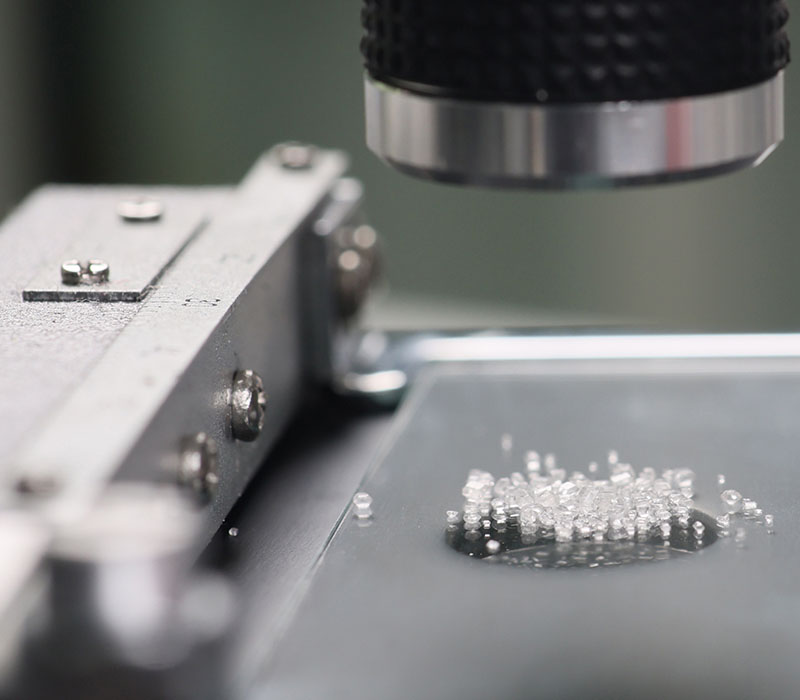
Sugars are essential for life. They are present on the surface of all human and animal cells, as well as on viruses and bacteria.
While it was long believed that cell-surface sugars served only to protect cells, decades of scientific studies have shown that they play many other more complex roles. Assembled through a complex process, these sugars interact with many other types of molecules including proteins, communicating biochemical information that is critical for cell function.
However, these interactions are difficult to study. This is where Samy Cecioni, a professor in the Department of Chemistry at Université de Montréal, comes in. With his research team, he has developed a new category of tools to better observe the transient dynamics between sugars and proteins. Using a process that involved attaching a special molecule fragment to sugar molecules, he was able to capture these weak interactions by creating a new stronger chemical bond. This was the first time this had been attempted with sugars. The team then sought to make these new bonds visible through fluorescence.
After demonstrating proof of concept with fucose and then with other so-called “complex” sugars, the team worked on extending the method to all types of sugars, in order to be able to study these interactions directly on the surface of living cells.
These major advances shed light (literally!) on the transient interactions between sugars and proteins. Given how widespread these interactions are, this opens the door to all kinds of research aimed at answering fundamental questions. There could also be practical applications, particularly in the medical field, since sugars play a role in bacterial and viral infections.
DOI: https://doi.org/10.69777/281486
References :
- Bousch B., Vreulz B., Kansal K., El-Husseini A., Cecioni S. (2023). Fluorogenic photo-crosslinking of glycan-protein recognition using a fluorinated azido-coumarin fucoside. Wiley, Angewandte Chemie International Edition. https://onlinelibrary.wiley.com/doi/full/10.1002/anie.202314248
- Vreulz B., De Crozals D., Cecioni S. (2025). A trifunctional probe for generation of fluorogenic glycan-photocrosslinker conjugates. RSC Chemical Biology. https://doi.org/10.1039/D5CB00206K

Exploring antibody maturation to prevent dysfunction

Revealing family letters