
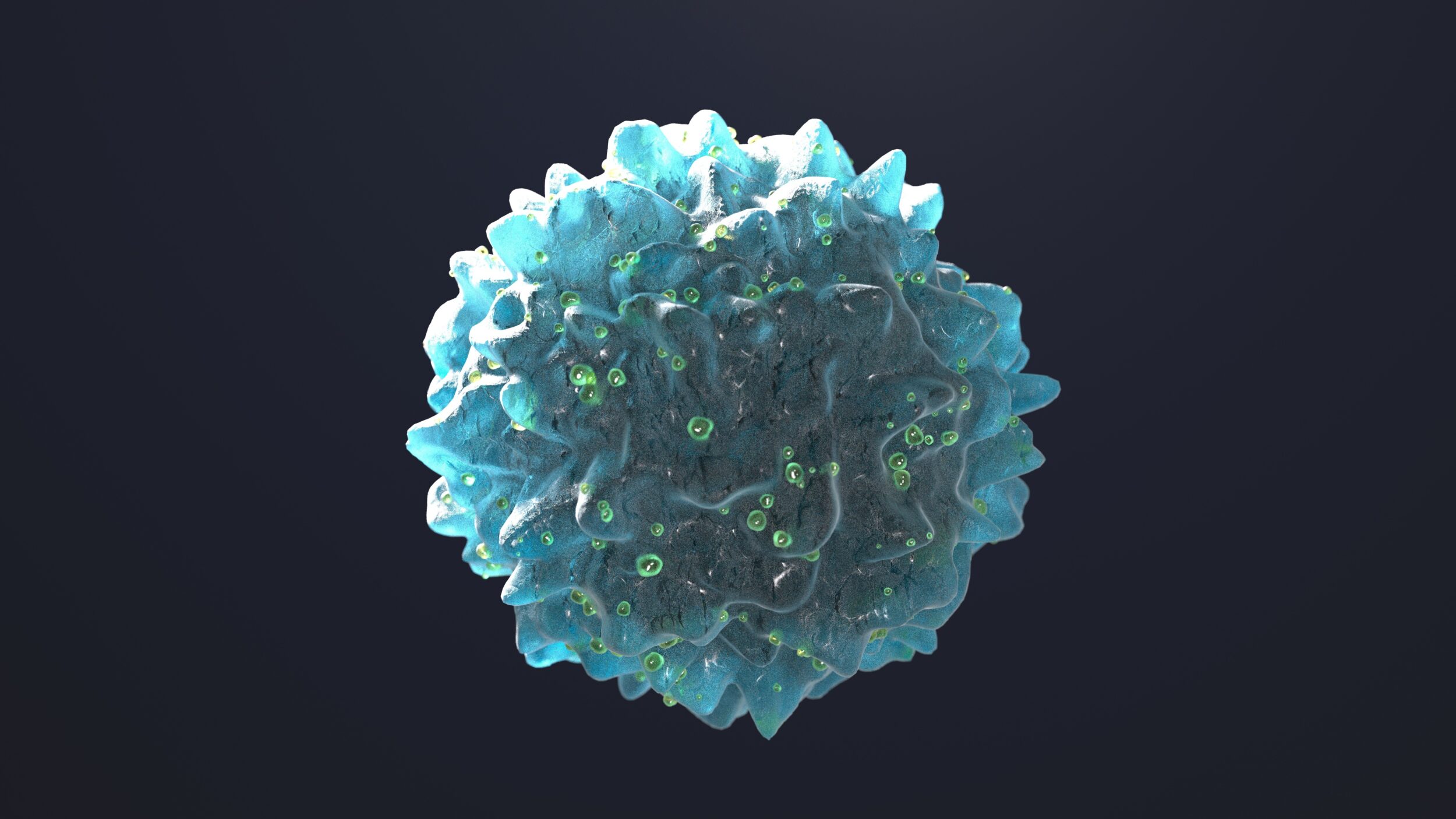
Understanding how our immune system manages to produce efficient antibodies is at the heart of Javier Marcelo Di Noia, work at the Institut de recherche clinique de Montréal. The basic research he leads in his lab delves into a long-documented phenomenon: in cases of infection or vaccination, the first antibodies produced have limited affinity, but their effectiveness increases through a process known as antibody maturation. The mechanism is driven by targeted DNA mutations in the B cells regulated by a key enzyme: activation-induced cytidine deaminase (AID). Although the mutations are generally linked to a genetic disease or cancer, in this context, they are part of a unique evolutionary strategy that enables the immune system to generate a long-term memory. But when the process goes awry, it can lead to immunodeficiencies or foster the development of lymphomas, emphasizing the importance of better understanding the molecular structures.
With that in mind, the researcher and his team combine a range of experimental approaches, using molecular biology and biochemistry to analyze AID’s activity and interactions with other proteins and cell lines to substantiate their findings. With mouse models, they are able to recreate specific conditions and shed further light on the immune processes.
The methods have led to major discoveries. To start, they made it possible to identify several genes that regulate the proliferation and differentiation of B cells, which are essential to strong antibody response. Notably, enzymes like PRMT1 have emerged as key factors in determining the fates of B cells and certain lymphomas. It was also possible to model AID mutations responsible for immunodeficiencies. The findings help clarify why AID mainly targets antibody genes but can still cause accidental mutations with serious consequences. In addition, the lab’s new line of research on the CDADC1 enzyme, which is part of the same family as AID, revealed a previously unknown metabolic pathway in humans that modulates the toxicity of some chemotherapy treatments.
The outcomes are promising. By broadening the list of genes that may explain some unresolved immunodeficiencies, they provide clinicians with new diagnostic leads. They also highlight cell dysregulation that could eventually bring about targeted therapies for lymphomas by, for example, modulating specific enzymes. Finally, they open the door to potential applications in vaccines by improving the effectiveness of certain immunizations.
References
- Subramani, P. G., Fraszczak, J., Hellnes, A., Estall, J., Möröy, T., et Di Noia, J. M. (2024). A conserved role of hnRNPL in regulating alternative splicing of transcriptional regulators necessary for B cell activation. EMBO Reports. https://doi.org/10.1038/s44319-024-00152-3
- Litzler, L. C., Zahn, A., Dionne, K. L., Sprumont, A., Ferreira, S. R., Slattery, M., Méthot, S. P., Patenaude, A. M., Hébert, S., Kabir, N., Subramani, P. G., Jung, S., Richard, S., Kleinman, C., et Di Noia, J. M. (2023). Protein arginine methyltransferase 1 regulates B cell fate after positive selection in the germinal center in mice. Journal of Experimental Medicine, 220(9), e20220381. https://doi.org/10.1084/jem.20220381
- Méthot, S. P., Litzler, L. C., Subramani, G. P., Eranki, A., Fifield, H., Patenaude, A.-M., Gilmore, J. C., Santiago, G. E., Bagci, H., Côté, J.-F., Larijani, M., Verdun, R. E., et Di Noia, J. M. (2018). A licensing step links AID to transcription elongation for B cell mutagenesis. Nature Communications, 9(1), 1248. https://doi.org/10.1038/s41467-018-03387-6

Sensors under pressure

Improving wellness support in postsecondary institutions
