
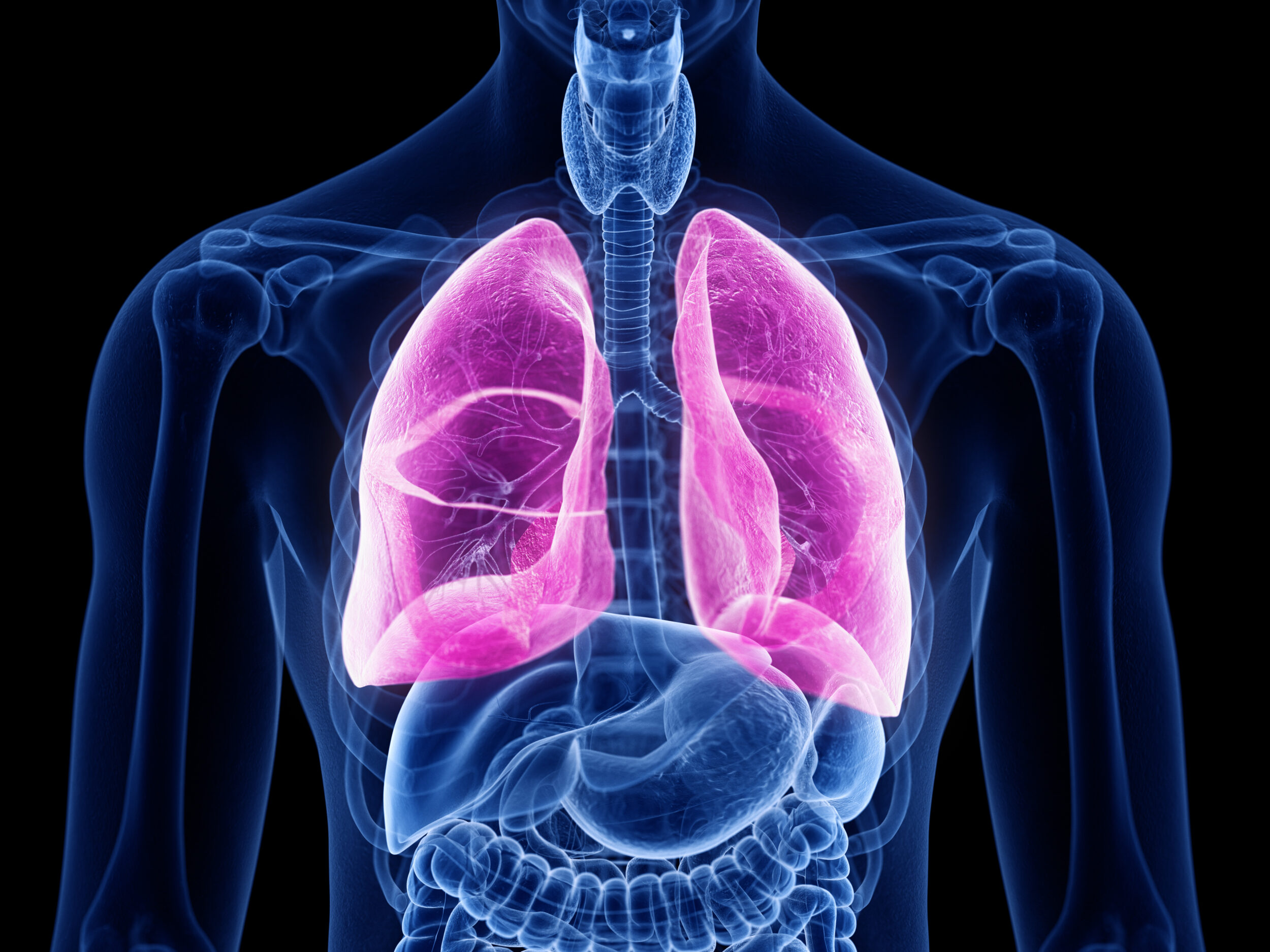
Chronic obstructive pulmonary disease (COPD) remains a leading cause of hospitalization and death. For Dr. Benjamin Smith, a clinician-researcher at McGill University, the observation is striking: smoking is not the only risk factor. Indeed, some patients smoke their entire lives without developing the disease, while about a quarter of those affected have never smoked. Furthermore, the significant decline in smoking over the past few decades has not led to a corresponding drop in the number of cases. This variability raises a central question: what if the origins of COPD date back well before adulthood? Understanding this heterogeneity has become the starting point for a research program aimed at better preventing and treating the disease.
To address this, the research team is taking a dual approach, combining epidemiology and clinical research. Using large population cohorts and lung imaging analyses (CT scans), they have identified a key determining factor: nearly 50% of COPD cases are linked to inadequate lung development beginning in childhood, or even before birth. Thus, some people start life with reduced lung capacity, making them more vulnerable. At the same time, the team analyzed progenitor cells—essential for maintaining lung tissue—in the laboratory and observed that in affected patients, these cells appear depleted, contributing to the progressive deterioration of the lungs. They are therefore exploring an innovative approach: harvesting these cells, multiplying them in the laboratory, and then re-injecting them into the patient to restore lung function.
These advances open up major prospects. On the one hand, a better understanding of the developmental origins of COPD will allow for earlier identification of at-risk individuals and intervention on modifiable factors such as nutrition and environmental exposures. On the other hand, cell therapy could, in the long term, slow or even reverse the progression of the disease—a first in this field. By addressing both prevention and treatment, this research could permanently transform the management of COPD and improve patients’ quality of life.
* This text was translated using an artificial intelligence tool and edited by a staff member.
Références
Debban, C. L., Ambalavanan, A., Ghosh, A., Li, Z., Buschur, K. L., Ma, Y., George, E., Pistenmaa, C., Bertoni, A. G., Oelsner, E. C., Michos, E. D., Moraes, T. J., Jacobs, D. R., Christenson, S., Bhatt, S. P., Kaner, R. J., Simons, E., Turvey, S. E., Vameghestahbanati, M., … Smith, B. M. (2024). “Dysanapsis genetic risk predicts lung function across the lifespan”, American Journal of Respiratory and Critical Care Medicine, 210(12), 1421-1431. https://doi.org/10.1164/rccm.202401-0011OC
Christenson, S. A., Smith, B. M., Bafadhel, M., et Putcha, N. (2022). « Chronic obstructive pulmonary disease”, The Lancet, 399(10342), 2227-2242. https://doi.org/10.1016/S0140-6736(22)00470-6
Vameghestahbanati, M., Sack, C., Wysoczanski, A., Hoffman, E. A., Angelini, E., Allen, N. G., Bertoni, A. G., Guo, J., Jacobs, D. R., Kaufman, J. D., Laine, A., Lin, C. L., Malinsky, D., Michos, E. D., Oelsner, E. C., Shea, S. J., Watson, K. E., Benedetti, A., Barr, R. G., et Smith, B. M. (2023). “Association of dysanapsis with mortality among older adults”, European Respiratory Journal. https://pubmed.ncbi.nlm.nih.gov/37263750/

Marine Microbes: The Unsung Heroes of the Carbon Cycle

